This year's Freshers ask AI what to choose. The brands that cut through are the ones they already recognise.
Freshers 2026 brings the first cohort to arrive on campus having spent sixth form asking AI what to choose. But before a student asks which bank account to open, something has already shaped the answer. Trust is not created by the prompt. It is built before it.
Sarah O’Sullivan
Chief Revenue Officer
We all understand the value of marketing to a new cohort of students each year: the huge uplift in audience buying activity that takes place during Freshers, the unique window where hundreds of thousands of young people are making decisions about the brands, products and services that will become part of their everyday lives.
But there is a new additional shift that marketers thinking about campus activity in 2026 need to consider. And it goes beyond Gen Z. It goes beyond student spending.
It's about how this generation will discover, evaluate and choose brands in a world where AI is becoming part of their everyday decision-making.
Freshers 2026 will see the first ever Freshers university cohort to have grown up with generative AI tools as part of everyday sixth form life
(2 years of active use between the ages of 16 and 18) arriving on campus.
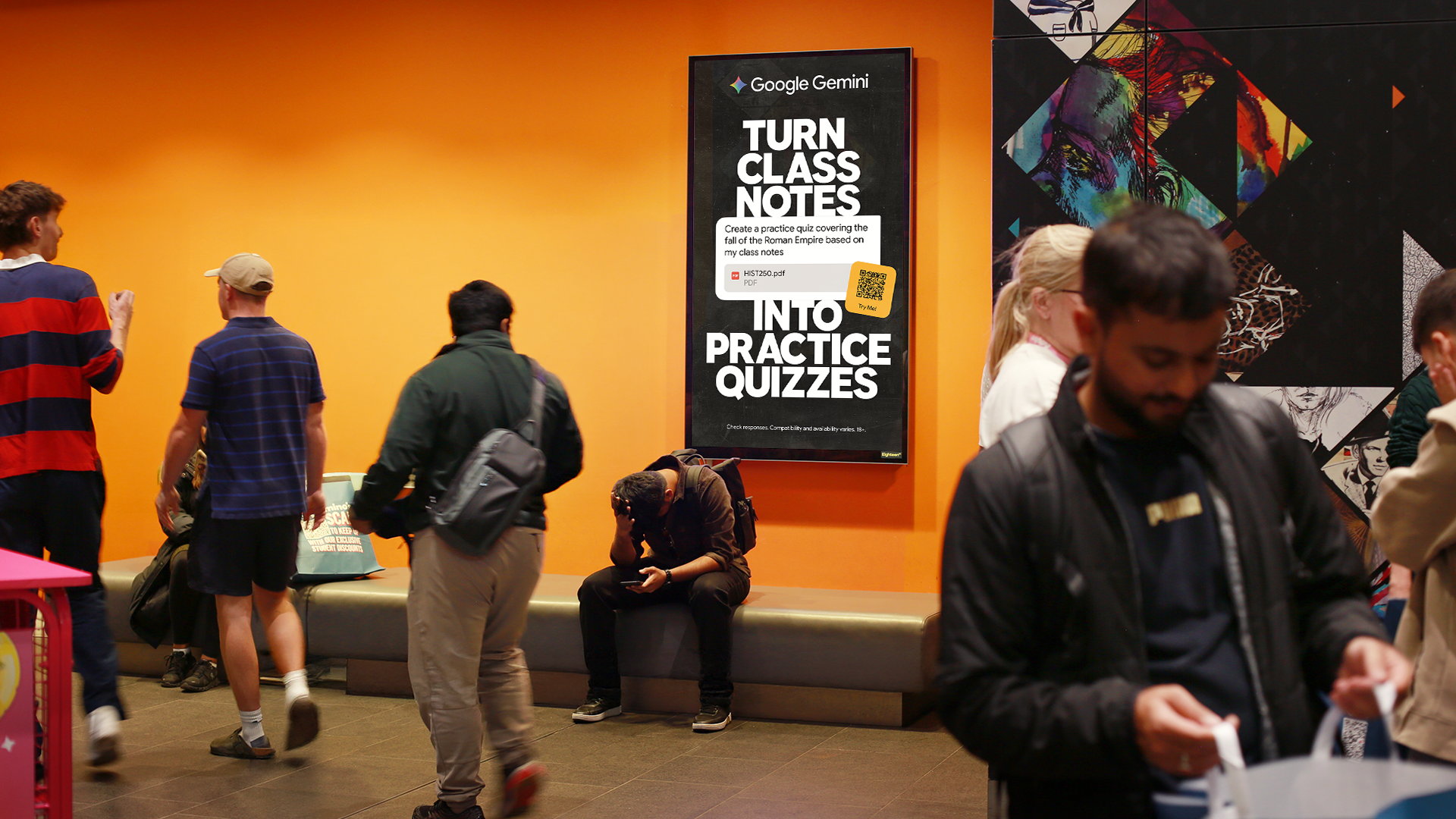
For them, asking ChatGPT, Gemini or another AI assistant for advice or recommendations will feel completely natural. And that's a first this Freshers. That's their new decision-making superpower.
But for brands, it creates a fascinating challenge. Because before a student asks AI which bank account to open, which supermarket offers the best value or which brands they should consider, something has usually influenced that decision.
A recommendation from a friend. A positive experience. A brand they recognise. A company that showed up in the right moment and genuinely helped them. Trust is not created by the prompt. It is built before it.
And this is why Freshers remains such a powerful moment for brands. This autumn, hundreds of thousands of young people will make one of the biggest transitions of their lives. They will leave home. Move to new cities. Meet new people. Create new routines. And, often for the first time, make independent purchasing decisions. A new bank account. A new supermarket. A new coffee shop. A new mobile provider. A new gym. A new takeaway favourite. For brands, these moments are incredibly valuable because people are not simply buying products. As we know, they are forming habits.
Behavioural science has shown us that major life transitions create powerful opportunities for people to establish new routines. The "Fresh Start Effect" demonstrates that when people enter a new chapter of life, they are often more open to making changes.
Few moments create a bigger reset than starting university.
And this is where the role for Out of Home (OOH) becomes particularly interesting. For years, we have known that OOH does far more than simply create awareness. Research such as JCDecaux, Bauer Media, Global and Posterscope's 'Point of Search' study has demonstrated the relationship between outdoor advertising and online behaviour, showing how OOH can trigger people to search, discover and take action.
Brands seen in physical spaces create digital behaviour.
A student sees a brand on campus. They become curious. They search. They ask friends. They explore. Increasingly, they will ask AI.
The technology may change, but the human behaviour underneath it remains the same. People trust brands they recognise. They choose brands they feel familiar with. They recommend brands they've had positive experiences with.
That is why I believe real-world brand visibility becomes even more important in an AI-enabled world. Not because AI replaces discovery. But because the brands most likely to be discovered are often the ones that have already earned attention, trust and familiarity.
For years, Freshers campaigns have been measured by impressions, QR scans, sign ups or immediate response. All of those things still matter.
But perhaps there is an additional question marketers should be asking:
"Did we become one of the brands students instinctively think about when they are making decisions?"
Because the brands that win Freshers do not just win September. They become part of the habits, preferences and conversations that shape the next generation of consumers, and their sentiment will now be firmly recorded in AI. And that is a far bigger opportunity than a single campaign window.
Sources and Research References:
- UCAS Undergraduate application statistics (undergraduate application trends and UK 18-year-old participation rates)
- Ofqual A-level entry statistics
- Office for National Statistics (ONS) population estimates
- Dai, H., Milkman, K. & Riis, J. (2014). The Fresh Start Effect: Temporal Landmarks Motivate Aspirational Behaviour
- JCDecaux, Bauer Media, Global and Posterscope: The Point of Search Research