Back to Campus. Back to Intention.
September is noise. January is signal. When students return after Christmas, their behaviour changes. This is when brand decisions start to stick. Freshers and term one are Fun with a capital F. Chaotic, loud, fuelled by novelty and questionable sleep patterns. Then Christmas happens. Everyone goes home. Bank statements are checked. Sleep resets. Perspective creeps in. And when students return in January, their sh*t gets real.
Sarah O’Sullivan
Chief Revenue Officer
September is noise. January is signal. When students return after Christmas, their behaviour changes. This is when brand decisions start to stick.
Freshers and term one are Fun with a capital F. Chaotic, loud, fuelled by novelty and questionable sleep patterns.
Then Christmas happens. Everyone goes home. Bank statements are checked. Sleep resets. Perspective creeps in.
And when students return in January, their sh*t gets real.
I see this every year through work, but this year I’ve had a front-row seat at home too. My daughter is now in her second year at university, and watching her return after Christmas has been a sharp reminder of how quickly student life shifts gears.
The carefree “let’s see what happens” energy fades fast. In its place comes routine, responsibility and the realisation that university isn’t just a social experience, it’s a serious commitment.
The shift is from chaos to coping. Her January return looks like:
• Adding an extra weekly dance class to manage stress
• Taking on a part-time job to make her money stretch
• Actively searching for a placement year because suddenly the future feels much closer than it did in October
None of this is accidental. It’s instinctive. And it’s happening across campuses nationwide.
By term two, students stop flirting with independence and start managing it.
Q1 is where habits are formed.
This is when students quietly enter self-improvement mode (not the Instagram version, the practical one).
They look for:
• Fitness that fits around study
• Tools that help them focus
• Structure that makes pressure manageable
There’s a real commercial truth here: habits formed at university often last far beyond graduation. This is where routines, preferences and brand loyalties harden.
Students aren’t chasing perfection throughout term time. They’re trying to cope. Brands that help them do that earn disproportionate trust.
January is context, not hype.
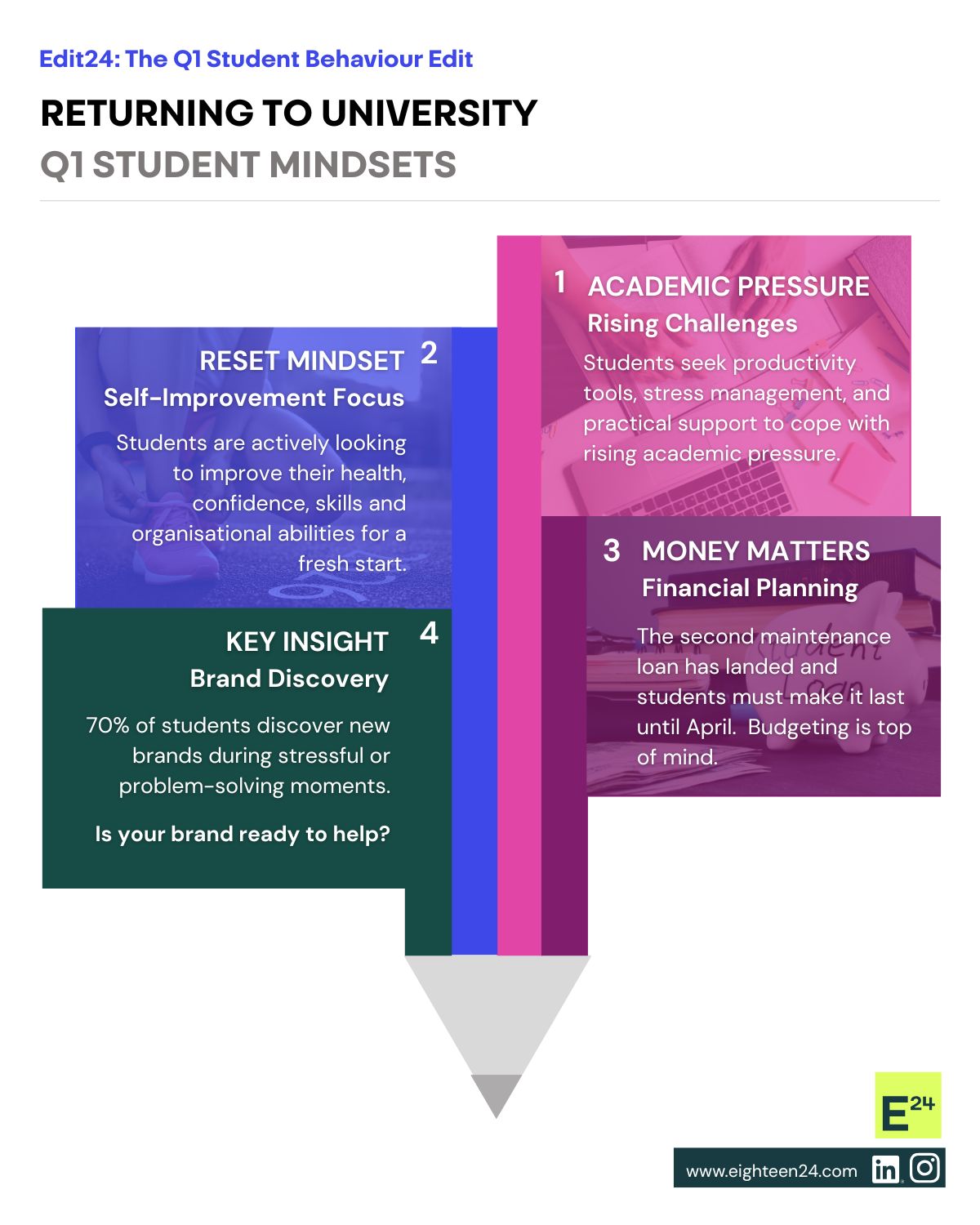
Deadlines land. Exams loom. Academic pressure becomes real.
Students actively seek anything that helps them perform better or feel less overwhelmed: productivity tools, stress management, food that fuels long days, small comforts that make life easier.
This is where brands either add value or add noise.
Show up with something genuinely useful and you stop being advertising. You become part of their routine. And routine is where loyalty lives.
Students are for life, not just for Freshers.
Trust isn’t built at one Freshers event.
It’s built in the Students’ Union study space. In the gym. In the café. In January, February, March and beyond.
At Eighteen24, our campus DOOH network sits inside those moments, when attention is high, habits form and life gets real.
For brands focused on long-term growth, this isn’t about one-off student campaigns.
It’s about showing up consistently, with relevance, across the academic year where you resonate.
That’s the difference between being seen, and being remembered.